

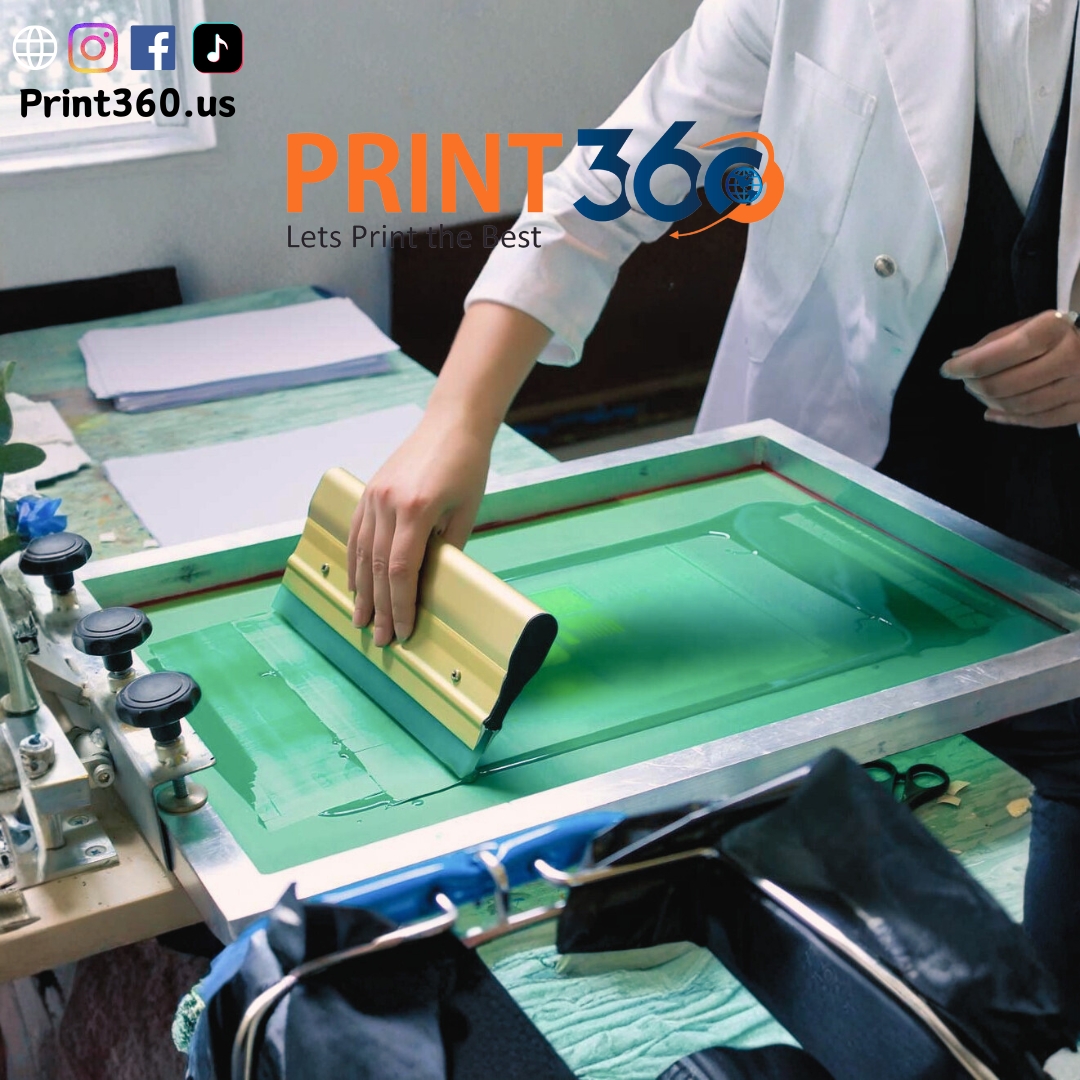
What Is Screen Printing? How It Works, Benefits & Applications
Screen printing is a popular printing method used in bulk production. It plays an important role in many industries today. This technique has a long history. It started in the 18th century when silk mesh became widely available. By the 19th century, it was commonly used in advertising. Today, it continues to grow and improve.
Screen printing is highly versatile. It allows businesses to customize products across different industries such as textiles, packaging, and promotional materials.
At Print360.us, we provide high-quality screen printing services. Our solutions are ideal for businesses looking to enhance their branding through packaging and promotional products. In this guide, you will learn what screen printing is, how it works, and its key benefits and uses.
What is Screen Printing?
Screen printing, also known as silk screening, is a method of transferring a design onto a surface using a mesh screen, ink, and a squeegee.
This process works on many materials, such as:
- Paper
- Fabric
- Plastic
It is widely used because it produces bright colors and clean designs. Businesses prefer it for creating attractive and professional prints.
How Does Screen Printing Work?
The screen printing process follows simple steps. Whether done by hand or machine, the method remains the same.
1. Design Creation
First, a design is created and printed on a transparent film. This film acts as a stencil.
2. Screen Preparation
2. Screen Preparation
A mesh screen is selected based on the design detail. Then, it is coated with a light-sensitive emulsion.
3. Exposure
3. Exposure
The design film is placed on the screen and exposed to strong light. The exposed areas harden, forming the stencil.
4. Stencil Development
4. Stencil Development
The soft (unexposed) emulsion is washed away. This leaves a clean stencil of the design.
5. Print Setup
5. Print Setup
The material (such as paper or packaging) is placed on the printing surface. The screen is aligned carefully.
6. Ink Application
6. Ink Application
Ink is poured onto the screen. A squeegee spreads the ink evenly, pushing it through the stencil onto the material.
7. Curing & Finishing
7. Curing & Finishing
Finally, the printed item is heat-cured. This makes the design long-lasting and fade-resistant.
Benefits of Screen Printing
Screen printing offers many advantages for businesses:
Versatility
Versatility
It works with many materials, including fabric, cardboard, plastic, and wood.
Durability
Durability
The ink layer is thick and strong. It resists sunlight, moisture, and wear.
Bright Colors
Bright Colors
Screen printing produces bold and vibrant colors that stand out.
Cost-Effective for Bulk Orders
Cost-Effective for Bulk Orders
The cost per unit becomes lower when printing in large quantities.
Fast Production
Fast Production
Once the setup is ready, printing is quick and efficient.
Easy Process
Easy Process
The method is simple and reliable, making it suitable for many industries.
Applications of Screen Printing
Screen printing is used in many areas:
- Custom Packaging – Printed boxes and bags for branding
- Textile Printing – T-shirts, uniforms, and fabric designs
- Promotional Products – Stickers, banners, and marketing materials
- Labels & Tags – Product labeling and branding
Using screen printing can improve your product presentation and brand visibility.
FAQs
1. What is screen printing?
It is a printing method that uses a mesh screen and stencil to apply ink onto a surface.
2. How does screen printing work?
It involves creating a stencil, applying ink through a screen, and curing the final print.
3. What are the benefits?
It offers durability, bright colors, and cost savings for bulk printing.
4. Can it be used for packaging?
Yes, it is widely used for custom packaging solutions.
5. Is it good for large orders?
Yes, it is ideal for bulk production.
6. What products can be printed?
Textiles, packaging, promotional items, and more.
7. Are there any limitations?
It is not ideal for highly detailed or photo-quality images.
It is a printing method that uses a mesh screen and stencil to apply ink onto a surface.
2. How does screen printing work?
It involves creating a stencil, applying ink through a screen, and curing the final print.
3. What are the benefits?
It offers durability, bright colors, and cost savings for bulk printing.
4. Can it be used for packaging?
Yes, it is widely used for custom packaging solutions.
5. Is it good for large orders?
Yes, it is ideal for bulk production.
6. What products can be printed?
Textiles, packaging, promotional items, and more.
7. Are there any limitations?
It is not ideal for highly detailed or photo-quality images.